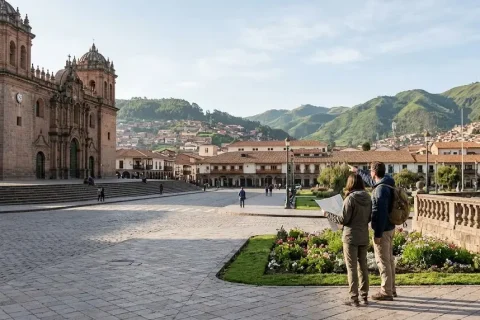
How to Choose a Machu Picchu Trekking Agency
To choose a Machu Picchu trekking agency well, check five things before paying anything: whether it is officially registered, which permits and tickets the price covers, what else is included, how large the group is, and what the safety plan looks like. Choosing an operator deserves as much attention as choosing the route.
The guide on the treks to Machu Picchu shows how each route differs in distance, elevation, difficulty, permit and time. This article focuses on the agency behind the route, and the questions work for any route.
How do you choose a Machu Picchu trekking agency?
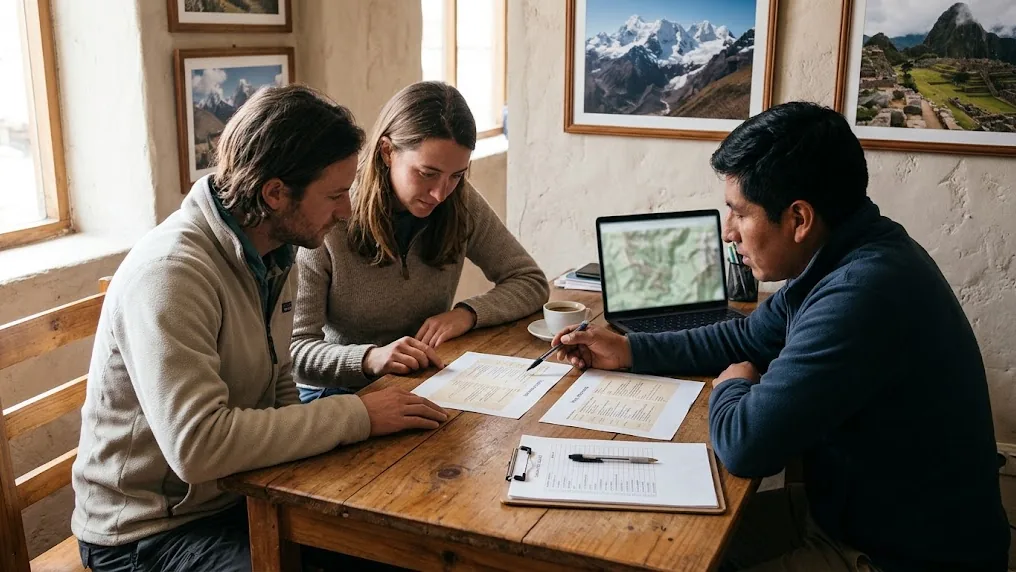
Compare permits and emergency procedures before paying any deposit, and ask every company the same practical questions. Never compare operators by headline price alone. A simple method works: shortlist two or three agencies and send each one the same message with your route, your dates and your group size, then compare the written answers side by side.
Your route also narrows the field: the Classic Inca Trail, the Short Inca Trail, the Salkantay Trek, the Lares Trek and the Choquequirao trek all work differently. Each differs in distance, elevation, difficulty level, permit and time required. The Short Inca Trail suits travelers with limited vacation time, since most itineraries take two days with one hotel night, while the Classic route covers four trekking days. A common Lares itinerary takes four days, and a traditional Choquequirao version can take around seven.
Is the agency officially registered?
Peru keeps a national directory for this. The agency regulation approved by Supreme Decree 005-2020-MINCETUR created the Directorio Nacional de Prestadores de Servicios Turísticos Calificados, and only registered agencies may use the name Agencia de Viajes y Turismo and the ministry’s badge.
Agencies that sell online must display that badge on their digital channel. The directory lists the legal name, tax ID, trade name and address, so you can compare them with what the agency shows on its website. Each entry also carries a registration certificate with a number and an issue date, and it is reasonable to ask the agency for both.
Which permits and tickets are included?
This is the question that separates serious operators from the rest. Peru’s tourism authorities limit Inca Trail access to 500 people daily, and that number includes guides and support workers. Entry requires an authorized agency and an advance reservation.
- Both the Classic and the Short Inca Trail need a permit.
- The Classic route closes throughout February for annual conservation work.
- Your Machu Picchu entry is a separate requirement, and your ticket comes with a specific circuit.
Ask exactly which permits and Machu Picchu tickets your package includes, and who buys them. For 2026, the Ministry of Culture set a Machu Picchu capacity of 5,600 visitors on selected high-season dates and 4,500 on the other days, so advance reservations matter beyond the trail permit itself. Salkantay can help when Classic Inca Trail permits disappear, although the Machu Picchu entry still needs separate planning.
What should the price include?
Ensure that the cost includes all the necessary hiking permits. Then go through the rest of the list: Machu Picchu entry, hotel and train categories, meals and equipment. Some operators run both shared and private departures, so ask which format the quote covers and what the maximum group size is.
Verify hotel and train categories before paying your deposit, and read the inclusion list before comparing prices, since a low price can hide extra costs. Ask whether the quoted price includes all entrance tickets, which meals are covered on longer tours and what happens when the weather changes the itinerary.
What about group size and safety?
Check the maximum number of hikers in your group. Request details about emergency oxygen and first-aid support, and inquire about the policies for cancellations because of bad weather.
Also confirm porter or horse weight rules before packing luggage, so you know how much gear the team will carry for you. If an operator cannot answer these in writing, keep looking. Altitude adds difficulty quickly, so spend several days around Cusco before you begin hiking. The dry season, from April through October, is the more favorable period for the Inca Trail, and June through August can bring colder nights at altitude. A little research before booking can prevent major problems later.